The Orchard and the Bog: Mahmoud Darwish, Seamus Heaney, and the Poetry of Wounded Homelands
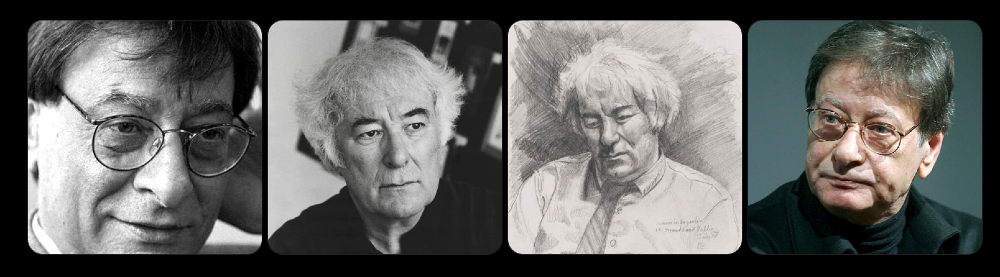
By Colonel Maqbool Shah, SM (Retd) | Jammu | 18 June 2026
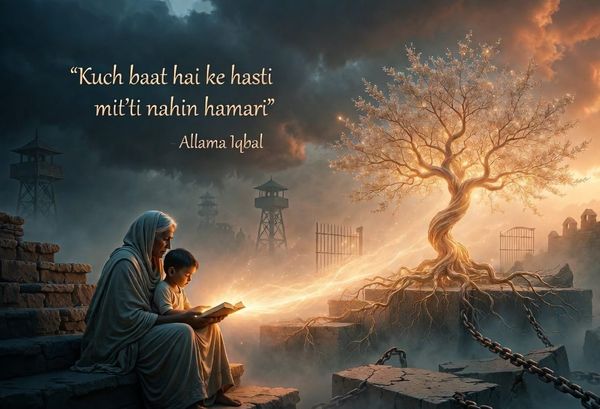
I came to Mahmoud Darwish through Edward Said. It was Said — that incomparable cartographer of exile, dispossession, and intellectual dignity — who first opened for me the door to Darwish’s world. Once I began reading Darwish, the experience was almost celestial. Here was a poet who did not merely write about Palestine; he made Palestine tremble inside the human conscience. Darwish pierces the heart because he refuses to separate beauty from suffering, homeland from exile, or memory from justice. To read him is to feel that poetry can become the last flag of a people, and also the flag of suffering humanity itself.
Seamus Heaney, on the other hand, has been an old and steady companion. His famous resolve in “Digging” — “Between my finger and my thumb, / The squat pen rests. I’ll dig with it” — has often returned to me in moments of reflection and decision. For a soldier who later turned to writing, those lines carry a peculiar force. They suggest that the pen too can be an instrument of excavation: of memory, history, conscience, and buried truth.
It is from this double apprenticeship — Said leading me to Darwish, and Heaney reminding me that writing too is a form of digging — that this essay emerges.
After Zauq’s Delhi and Miłosz’s Europe, we come to two other landscapes where history did not pass gently: Mahmoud Darwish’s Palestine and Seamus Heaney’s Ireland. In their poetry, homeland is never merely a place on the map. It is an injured presence. It breathes, remembers, accuses, mourns, and endures. It is the village erased from geography, the bog preserving old violence, the field worked by ancestral hands, the house abandoned under pressure, the border that enters the nervous system, and the grave that refuses silence.
Darwish was born in 1941 in al-Birwa in Galilee, a Palestinian village later razed; his family’s displacement and their later status as “internal refugees” or “present-absent aliens” formed the primal wound behind much of his work. He lived in exile in Beirut and Paris, authored more than thirty books of poetry and eight books of prose, and became one of the central literary voices of the Palestinian experience. Heaney, born in 1939 in County Derry, Northern Ireland, came from a farming background at Mossbawn, a world of cattle, fields, silence, labour, local speech, and inherited tensions between the Gaelic rural past and industrial Ulster.
One became the great poetic voice of Palestine; the other the most resonant poetic conscience of modern Ireland. Yet neither can be reduced to the political history that formed him. That is precisely why they matter. Darwish is not only a Palestinian poet because he writes of Palestine. He is Palestinian because he teaches the world what it means to carry a homeland after it has been taken away. Heaney is not only Irish because he writes of Ireland. He is Irish because he listens to the soil until it reveals the moral pressure of history buried beneath ordinary life.
In both poets, land is never inert. The field is not merely a field; it is inheritance. The village is not merely a village; it is evidence of an interrupted life. The bog is not merely bogland; it is an archive of violence. The house is not merely a house; it is the first republic of belonging. Darwish’s lost Palestine and Heaney’s troubled Ireland speak to each other across language, religion, history, and geography. The Palestinian olive grove and the Irish bogland may seem distant, but in poetry they become neighbouring territories of the human condition.
The central question joining them is not simply: what happened to Palestine, or what happened to Ireland? The deeper question is: what happens to the human soul when the land beneath it becomes contested, occupied, divided, or mourned?
Darwish answers by making language itself a homeland. Heaney answers by making language an excavation. Between them, poetry becomes the last moral territory left to a people when politics has failed them.
I. The land as wound
There are poets for whom land is scenery, poets for whom land is pastoral memory, and poets for whom land is fate. Darwish and Heaney belong to the third category. They do not look at land from a distance. They are implicated in it. Their poetry rises from the knowledge that soil is not neutral. It contains the buried, the dispossessed, the conquered, the vanished, the guilty, the innocent, and the still-unredeemed.
For Darwish, Palestine is never an abstraction. It is village, mother, bread, olive tree, stone, road, checkpoint, sea, exile, and return. His birthplace, al-Birwa, is not simply biographical data; it becomes the lost origin around which a poetic civilisation is built. The razed village becomes a memory-field. The child who loses geography becomes the poet who turns language into replacement geography.
This is why Darwish’s poetry has such extraordinary emotional force. It does not plead merely for territory. It insists upon the recovery of presence. Palestine, in Darwish, is not a slogan; it is a human arrangement of smell, sound, ancestry, hospitality, humiliation, and longing. It is the place where the mother bakes bread, where the dead remain neighbours, where the olive tree becomes a form of memory, and where exile is not simply absence from land but disturbance of the entire moral order.
Heaney’s Ireland is also not merely a nation. It is Mossbawn, Anahorish, Derry, Bellaghy, farmyard, spade, turf, well water, potato drills, cattle, rain, kitchen, field, ditch, and bog. But Ireland in Heaney is not innocent pastoral romance. The rural world is tender, but it is also charged. Beneath its surface lie religious memory, colonial history, partition, sectarian pressure, political murder, and the expectation that the poet must speak for his community.
Heaney’s greatness lies in his refusal to simplify this burden. He knows that the land carries beauty and blood together. The field is generative, but it is also haunted. The bog preserves butter and bodies, fertility and sacrifice. The same earth that yields crops also conceals old violence. In this sense, Heaney’s poetry is not merely pastoral; it is archaeological. He digs into language as his father and grandfather dug into earth.
That famous Heaney movement — from spade to pen — is not a rejection of labour but its transfiguration. The poet cannot dig potatoes, turf, or drainage ditches with ancestral skill, but he can dig memory. He can cut into silence. He can expose the strata beneath public speech. He can make the poem itself an act of excavation.
Darwish’s land is wounded by dispossession; Heaney’s land is wounded by historical division. Darwish writes from the condition of exile; Heaney writes from the condition of moral inheritance. Darwish’s central drama is the loss of home. Heaney’s central drama is the responsibility of staying answerable to home without becoming imprisoned by its tribal demands.
One loses the homeland and carries it in language.
The other remains tied to the homeland and must interrogate what that belonging requires.
II. Language as last homeland
For Darwish, Arabic becomes the house that cannot be demolished. When land is confiscated, when return is delayed, when the map becomes hostile, language gathers what history has scattered. Arabic becomes orchard, kitchen, village, mother, prayer, lament, archive, and rebellion. It is not simply the medium of expression; it is the medium of survival.
Darwish’s early reputation as a resistance poet was tied to the Palestinian national struggle. His poem “Identity Card” became emblematic of Palestinian assertion; Poetry Foundation notes that it was turned into a protest song and that Darwish was placed under house arrest after its circulation. But the mature Darwish cannot be contained within the category of protest. He moves from declaration to meditation, from slogan to metaphysics, from national wound to existential homelessness.
This is crucial. Darwish does not abandon Palestine when he becomes universal. Rather, he goes so deeply into Palestine that Palestine becomes a universal language of loss. The exile, the refugee, the dispossessed, the man at the checkpoint, the woman remembering a house, the child carrying an inherited key — these are Palestinian figures, but they are also human figures. Darwish makes the local wound large enough to contain the world.
Heaney’s relationship with language is different. He writes in English, the language of power, empire, education, and literary inheritance. But he does not write an imperial English. He makes English answer to Irish ground. He gives it local pressure, rural tactility, Gaelic undertone, Catholic memory, Ulster consonants, and the weight of place-names. Heaney’s English is not abstract metropolitan English. It is earth-marked, rain-marked, turf-marked, and labour-marked.
This gives us one of the finest contrasts between the two poets:
Darwish writes in the language of dispossession turned into homeland.
Heaney writes in the language of inheritance turned into excavation.
Darwish’s Arabic preserves a people from erasure. Heaney’s English is made to confess what lies beneath its own historical authority. Darwish uses language as return. Heaney uses language as digging.
Yet both understand that language is never innocent. It can wound, conceal, classify, and dispossess. It can also restore, remember, dignify, and rescue. For Darwish, to name Palestine is to resist disappearance. For Heaney, to name Mossbawn, Anahorish, Broagh, or Toome is to release the hidden music of place from official speech.
A homeland survives first in names. Once names are erased, memory begins to perish. Darwish and Heaney therefore become custodians of naming. They keep alive the villages, fields, mothers, roads, wells, bogs, graves, and sounds that history would otherwise reduce to footnotes.
III. The poet and violence
Both poets lived under the pressure of public violence, but both resisted becoming mere instruments of political messaging.
Darwish’s world is marked by exile, occupation, surveillance, imprisonment, and collective dispossession. Britannica notes his repeated arrests from a young age for reciting poetry and travelling without permits, and records his later movements through Moscow, Cairo, Beirut, London, Paris, Tunis, and Ramallah. His biography itself reads like the itinerary of a scattered century. But Darwish’s achievement lies in preserving lyric tenderness within political catastrophe. He does not allow the oppressor to decide the emotional range of the oppressed.
This is one of Darwish’s great lessons: a dispossessed people must not surrender beauty. To sing only anger is to allow violence to shrink the soul. Darwish’s Palestine contains rage, yes, but also love, irony, metaphysical doubt, sensuality, memory, and longing. He understands that the colonised or occupied subject is often expected to perform only suffering. Darwish refuses this reduction. He insists that the Palestinian is not merely a victim or symbol, but a complete human being.
Heaney’s pressure was different but equally demanding. The Troubles in Northern Ireland created a moral climate in which silence could seem like evasion and speech could seem like betrayal. The poet from a Catholic background in Northern Ireland was expected, by some, to bear witness in a particular manner, to take sides in a visible way, to turn poetry toward public denunciation. Heaney did address violence, but he did so through indirection, myth, archaeology, elegy, and moral unease.
This does not make him evasive. It makes him serious. Heaney understood that political violence corrupts language before it kills bodies. It produces slogans, hardened identities, ritual accusations, and communal permissions. His poetry refuses the false clarity of propaganda. He does not ask, “Which side shall I flatter?” He asks, “What does violence do to the conscience of those who live near it, fear it, inherit it, or rationalise it?”
The Nobel Committee awarded Heaney the 1995 Nobel Prize in Literature for work of “lyrical beauty and ethical depth,” a phrase that captures precisely this double fidelity: to art and to conscience. Heaney’s ethical depth lies not in issuing verdicts from a safe height, but in remaining inside difficulty. He knows that the poet cannot escape history, but he also knows that poetry dies when it becomes only history’s loudspeaker.
Darwish asks: how does a dispossessed people keep its soul?
Heaney asks: how does a divided people keep its conscience?
These are neighbouring questions. Both arise when violence enters the ordinary world and demands that language serve it. Both poets refuse. Darwish protects the lyric from becoming a communiqué. Heaney protects the lyric from becoming an alibi.
IV. The dead beneath the poem
The dead are everywhere in Darwish and Heaney. But they are not merely mourned. They exert pressure. They ask to be remembered correctly.
Darwish’s dead are the displaced, the exiled, the unnamed, the martyrs, the mothers, the villagers, the children, the absent, the buried, the ones who never returned, the ones who returned to find the village gone. They are not abstractions. They are presences hovering at the edge of speech. His poetry is a struggle against disappearance — not only physical disappearance, but the deeper erasure that occurs when a people’s grief is denied narrative legitimacy.
In Darwish, the dead do not ask for revenge alone. They ask for recognition. They ask to be held in language. The poem becomes a grave marker where no grave is available, a map where the map has been redrawn, a house where the house has been taken.
Heaney’s dead are different. They lie under bogland, in family memory, in road accidents, in sectarian murder, in mythic sacrifice, in the old rituals of tribal belonging. His bog poems are among the most haunting attempts in modern poetry to connect ancient violence with contemporary political murder. The preserved bodies of the bog become mirrors in which modern Ireland sees its own buried rituals of punishment, loyalty, silence, and complicity.
This is where Heaney’s archaeological imagination becomes morally dangerous in the best sense. He does not simply condemn ancient violence from the safety of modernity. He asks what remains of it inside the present. What old permissions survive beneath modern speech? What ancestral darkness do communities carry into contemporary politics? What does it mean to belong to a people whose pain is real but whose retaliatory myths may also become destructive?
Darwish’s dead accuse erasure.
Heaney’s dead expose inheritance.
Together they show that the dead are never dead in wounded homelands. They remain beneath the tongue. They alter the weather of speech. They make every public word answerable to memory.
The soil remembers. The poem listens.
V. Mother, house, field, road
The most moving landscapes in both poets are often domestic. This is important because political violence always tries to turn human beings into categories: refugee, Catholic, Arab, Irish, Palestinian, nationalist, dissident, victim, suspect. Poetry reverses this process. It restores the person to the category.
In Darwish, the mother is central. She is not only biological mother but motherland, memory, nourishment, origin, and moral warmth. Bread, coffee, threshold, and household gestures become political without ceasing to be intimate. This is Darwish’s genius: he makes the smallest domestic image carry the burden of historical loss.
A mother’s bread is not merely bread when the homeland has been taken. It becomes continuity. It becomes proof that the people existed in texture, smell, labour, affection, and daily ritual before they were turned into a “question” or “problem” by diplomacy.
For Heaney, the domestic world is also foundational: the farm, the kitchen, the father’s labour, the mother’s speech, the local school, the pump, the forge, the byre, the churn, the turf stack. But again, this is not nostalgia alone. Heaney knows that the domestic world is where history first enters the body. Class, religion, silence, gender, language, authority, and inheritance are all absorbed before they are understood.
The road in Darwish is often the road of exile, checkpoint, return, or impossible passage. The road in Heaney is often the road between parish and world, childhood and adulthood, rural origin and literary vocation, Northern Ireland and elsewhere. Darwish’s road asks: can one return? Heaney’s road asks: can one leave without betrayal?
The house in Darwish is frequently lost, remembered, or carried inward. The house in Heaney is inhabited, revisited, excavated, and sometimes escaped. Darwish’s house has been taken by history. Heaney’s house has been complicated by history.
This difference matters. Darwish writes from dispossession; Heaney from entanglement. Darwish must recover the house. Heaney must understand what the house has made of him.
VI. Beyond nationalism
Both Darwish and Heaney were embraced as national poets. This is understandable, but it is also dangerous. The phrase “national poet” can honour a writer, but it can also imprison him. It can turn a difficult imagination into an emblem.
Darwish loved Palestine, but his mature poetry is not a narrow nationalism. Palestine becomes the name of every denied homeland, every interrupted childhood, every exile who discovers that memory is both shelter and wound. He is most Palestinian when he refuses to let Palestine become merely a political banner. He gives it metaphysical depth.
Heaney loved Ireland, but his poetry also exceeds Irishness. Ireland becomes a way of thinking about history, language, guilt, craft, ancestry, and moral responsibility. Heaney is most Irish when he refuses the simplifications of tribal expectation. He gives Ireland ethical depth.
This is the paradox of great national poetry: it becomes universal not by diluting its origins, but by going deeper into them. The shallow universal is placeless. The true universal is intensely placed. Darwish is universal because he is profoundly Palestinian. Heaney is universal because he is profoundly Irish.
The orchard and the bog are not interchangeable. They are specific, local, historical, sensuous. But once Darwish and Heaney have written them into poetry, they become part of the world’s moral vocabulary.
The orchard stands for dispossessed continuity.
The bog stands for buried memory.
Together they form an atlas of wounded belonging.
VII. The discipline of tenderness
What finally links Darwish and Heaney is not merely land, wound, or politics. It is tenderness under pressure.
Both poets know that brutality wants to harden the imagination. Occupation, exile, sectarian violence, and historical humiliation all create emotional economies of anger. Anger is often justified; indeed, without anger, moral perception can become dull. But anger alone cannot build a humane literature. It can burn, but it cannot always illuminate.
Darwish’s tenderness lies in his refusal to let Palestine be represented only by suffering. He writes of love, beauty, music, memory, and ordinary dignity. He gives the Palestinian not only a wound, but a face, a voice, a mother, a lover, a childhood, a metaphysical horizon.
Heaney’s tenderness lies in his fidelity to ordinary life: the feel of tools, the dignity of labour, the sound of local words, the vulnerability of family memory, the grief of premature death, the awkwardness of moral inheritance. He does not make Ireland heroic all the time. He makes it human.
This tenderness is not softness. It is discipline. To remain tender in a wounded homeland is an act of resistance. It prevents the imagination from becoming a mirror of the violence it opposes.
Darwish’s tenderness resists erasure.
Heaney’s tenderness resists brutal simplification.
Both poets prove that the highest form of witness is not noise but depth.
VIII. The poet as custodian
The custodian is not the owner. This distinction is central. Darwish does not “own” Palestine in poetry; he keeps its memory alive for those from whom ownership has been denied. Heaney does not “own” Ireland; he tends its buried voices, its compromised inheritances, its beauty and its unease.
The poet as custodian does not command history. He listens to it. He preserves what power discards. He retrieves what ideology flattens. He slows down the reader’s moral reflex. He makes grief exact.
Darwish keeps alive the names and sensations of a homeland under threat of erasure. Heaney keeps alive the textures of a place at risk of being consumed by sectarian narrative. Both rescue complexity. Both restore the human scale.
This is why their poetry remains urgently relevant in our own age, when homelands are again being destroyed, borders militarised, populations displaced, and language recruited into cruelty. Darwish and Heaney teach us that poetry cannot stop tanks, but it can stop erasure from becoming complete. It cannot resurrect the dead, but it can prevent their second death in forgetting. It cannot abolish exile, but it can make exile speak.
And when exile speaks fully, the world is no longer allowed to pretend innocence.
Conclusion: The soil remembers
Mahmoud Darwish and Seamus Heaney stand among the great poets of wounded homelands because they understood that land is never merely land. It is memory underfoot. It is the archive before the archive. It is where the dead wait, where the living labour, where children learn belonging before they learn history, and where politics eventually arrives to rename, divide, occupy, or sanctify.
Darwish’s Palestine is the orchard of dispossession: olive, fig, bread, mother, village, road, sea, and the ache of return. Heaney’s Ireland is the bog of inheritance: turf, field, spade, silence, buried bodies, local speech, and the burden of conscience. One poet writes from the wound of being expelled from home; the other from the wound of belonging to a home divided by history.
But both arrive at a shared truth: a homeland survives only when its memory remains morally alive. Territory can be occupied. Houses can be seized. Villages can be razed. Languages can be humiliated. Communities can be pressured into silence. Yet poetry can keep alive what power seeks to make invisible.
Darwish turns exile into song without letting song become consolation. Heaney turns inheritance into excavation without letting excavation become accusation alone. Both teach us that the poet’s task is not to decorate suffering, nor to simplify it, nor to exploit it for political theatre. The poet’s task is to listen until the wound speaks in its full human register.
The orchard remembers the absent.
The bog remembers the buried.
Between them stands poetry — not as escape from history, but as the deepest form of return.